Discover how tarot readings can help you confront anxieties, reframe limiting beliefs, and transform your mindset for lasting emotional well-being. Explore symbolic insights, Socratic questioning, and daily rituals for self-growth.
Introduction
What if the answers to your deepest anxieties were already within you, waiting to be uncovered? In a world where stress and uncertainty often cloud our judgment, finding clarity can feel like an impossible task. Yet, sometimes, the key to inner peace lies in asking the right questions—and listening to the wisdom they reveal.
Why Explore Your Inner Questions?
Many of us carry unspoken fears, doubts, or lingering questions that weigh on our minds. These unresolved thoughts can create mental blocks, affecting our well-being and decision-making. By confronting these questions head-on, we can begin to dissolve the tension they create and pave the way for personal growth.
One powerful way to engage with these questions is through introspective tools like the tarot. Far from being just a mystical practice, tarot can serve as a mirror to our subconscious, helping us reflect on our concerns with fresh perspective. Platforms like TarotQuest offer accessible ways to explore this method, even for beginners.
What This Article Will Cover
- How tarot can act as a symbolic guide to understanding your anxieties.
- Techniques to frame questions that reveal hidden blockages.
- Practical ways to use tarot as a daily well-being ritual.
Whether you’re new to divination or simply seeking a new approach to self-reflection, this guide will help you harness the power of questioning to improve your inner well-being.
La cartomancie comme miroir de l’inconscient : comprendre ses angoisses par les symboles
La cartomancie, et plus particulièrement le tarot, agit comme un pont entre le conscient et l’inconscient, révélant les peurs enfouies à travers des archétypes universels.
Chaque carte tirée est une invitation à explorer les couches cachées de notre psyché, où résident nos angoisses les plus profondes.
Les symboles comme langage de l’inconscient
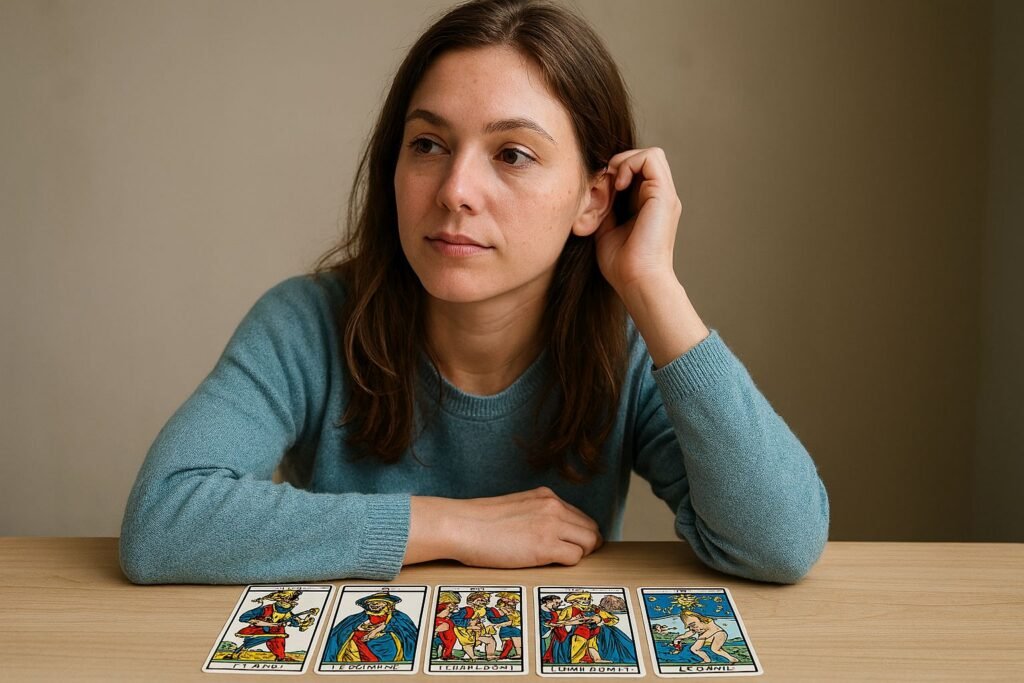
Les images du tarot, riches en symboles, parlent directement à notre esprit intuitif. Elles contournent le mental rationnel pour toucher les émotions et les mémoires oubliées. Par exemple, l’Archange dans le tarot de Marseille peut représenter une peur de l’autorité ou, au contraire, un appel à la guidance spirituelle.
Comment interpréter les messages cachés
Pour décrypter ces messages, il faut :
- Observer les détails visuels de la carte (couleurs, postures, objets).
- Ressentir les émotions qu’elle suscite sans jugement.
- Relier ces impressions à des situations concrètes de votre vie.
En acceptant ces symboles comme des reflets de nos tourments intérieurs, nous ouvrons la porte à une compréhension plus profonde de nous-mêmes.
Poser les bonnes questions : l’art socratique du tirage de tarot pour clarifier ses blocages
Le tarot, bien plus qu’un simple outil divinatoire, est une porte ouverte vers l’introspection profonde.
En formulant des questions précises et intentionnelles, on active un dialogue intérieur capable de révéler les blocages invisibles.
L’art de questionner : une approche socratique
La méthode socratique repose sur l’idée que la vérité émerge par le questionnement systématique. Appliquée au tarot, cette approche transforme le tirage en un miroir de nos contradictions et de nos peurs. Plutôt que de demander “Que me réserve l’avenir ?”, une question comme “Quelle croyance limitante m’empêche d’avancer dans ce projet ?” invite à une exploration plus nuancée.
Exemples de questions puissantes
- Sur les peurs : “Quelle angoisse cachée influence mes décisions actuelles ?”
- Sur les relations : “Quel schéma relationnel dois-je reconnaître pour évoluer ?”
- Sur la croissance personnelle : “Quelle leçon cette situation difficile cherche-t-elle à m’enseigner ?”
Éviter les pièges des questions mal posées
Certaines questions, trop vagues ou orientées vers le passé, peuvent brouiller la clarté du tirage. Par exemple, “Pourquoi cela m’arrive-t-il ?” place la personne dans une posture de victime. À l’inverse, “Comment puis-je transformer cette expérience en opportunité ?” recentre l’énergie sur l’action et la résolution.
Le tarot devient alors un catalyseur de prise de conscience, où chaque carte tirée est une réponse à une question soigneusement choisie.
Le tarot de Marseille comme outil de restructuration cognitive : transformer ses pensées limitantes
Le tarot de Marseille, bien plus qu’un simple jeu de cartes, agit comme un catalyseur pour identifier et déconstruire les schémas de pensée négatifs.
Identifier les croyances limitantes à travers les arcanes
Chaque carte du tarot de Marseille porte en elle une symbolique profonde qui peut révéler nos peurs cachées ou nos convictions auto-sabotantes. En tirant une carte comme Le Bateleur ou La Papesse, on peut découvrir des blocages liés à la créativité ou à l’intuition, et ainsi engager un travail de restructuration cognitive.
Par exemple, si la carte de La Tour apparaît souvent, elle peut signaler une résistance au changement ou une peur de l’inconnu. Reconnaître ces schémas est la première étape pour les transformer.
Techniques de restructuration cognitive avec le tarot
- Le dialogue avec les cartes : Poser des questions précises aux arcanes pour obtenir des réponses symboliques qui aident à reformuler ses pensées.
- La visualisation positive : Utiliser les images des cartes (comme Le Soleil ou L’Étoile) pour ancrer des affirmations positives et remplacer les croyances limitantes.
- Le journaling guidé : Noter les messages des tirages et les confronter à ses propres réflexions pour créer un nouveau récit intérieur.
Intégrer le tarot dans une pratique quotidienne de bien-être
Pour que cette restructuration cognitive soit durable, il est essentiel d’intégrer le tarot dans une routine de développement personnel. Un tirage quotidien, même simple, peut servir de rappel pour recentrer ses pensées et cultiver une mentalité plus résiliente.
Rituel and Anchoring: How a Tarot Reading Becomes a Daily Well-Being Practice
Transforming a tarot reading into a ritual creates a sacred space where the mind and spirit can align, fostering inner peace and clarity.
Creating a Sacred Space
To make tarot a daily practice, begin by setting aside a quiet, dedicated space free from distractions. Light a candle, burn incense, or play soft music to signal to your subconscious that this is a moment of introspection. The physical environment acts as an anchor, helping you transition into a meditative state where insights flow more freely.
Establishing a Routine
Consistency is key to deepening the connection between the cards and your inner self. Whether you draw a single card each morning or perform a weekly spread, repetition builds familiarity and trust in the process. Over time, this routine becomes a comforting ritual, much like journaling or meditation, that grounds you in the present moment.
Reflective Practices
- Journaling: Write down your interpretations and emotions tied to each card to track patterns and growth.
- Meditation: Spend a few minutes in silence after a reading to internalize the messages.
- Gratitude: End each session by acknowledging one positive insight or lesson learned.
By integrating these elements, tarot transcends divination and becomes a powerful tool for self-care, helping you navigate life’s challenges with greater resilience and awareness.
Conclusion
Exploring the depths of our inner world through tools like cartomancy and the Tarot of Marseille is not just an act of divination—it is a journey toward self-awareness and emotional liberation. By confronting the questions that haunt us, we unlock the power to reframe our thoughts, dissolve limiting beliefs, and cultivate a profound sense of well-being. This transformative process turns uncertainty into clarity and fear into empowerment, making each tarot draw a step toward inner peace.
The Path Forward
As we integrate these practices into our daily lives, we discover that the true magic lies not in the cards themselves, but in the intention and reflection they inspire. The ritual of drawing a card becomes a sacred pause—a moment to reconnect with ourselves and realign with our deepest truths.
Key Takeaways
- Self-Reflection: Use the tarot as a mirror to explore unconscious fears and desires.
- Cognitive Restructuring: Transform negative thought patterns by reframing the narratives the cards reveal.
- Daily Practice: Turn tarot into a mindful ritual to anchor yourself in the present and foster emotional balance.
Ultimately, the quest for inner well-being is not about finding all the answers, but about asking the right questions—and trusting the wisdom that emerges from within.
For a comprehensive guide, read this overview about how to choose the Lenormand cards deck.